
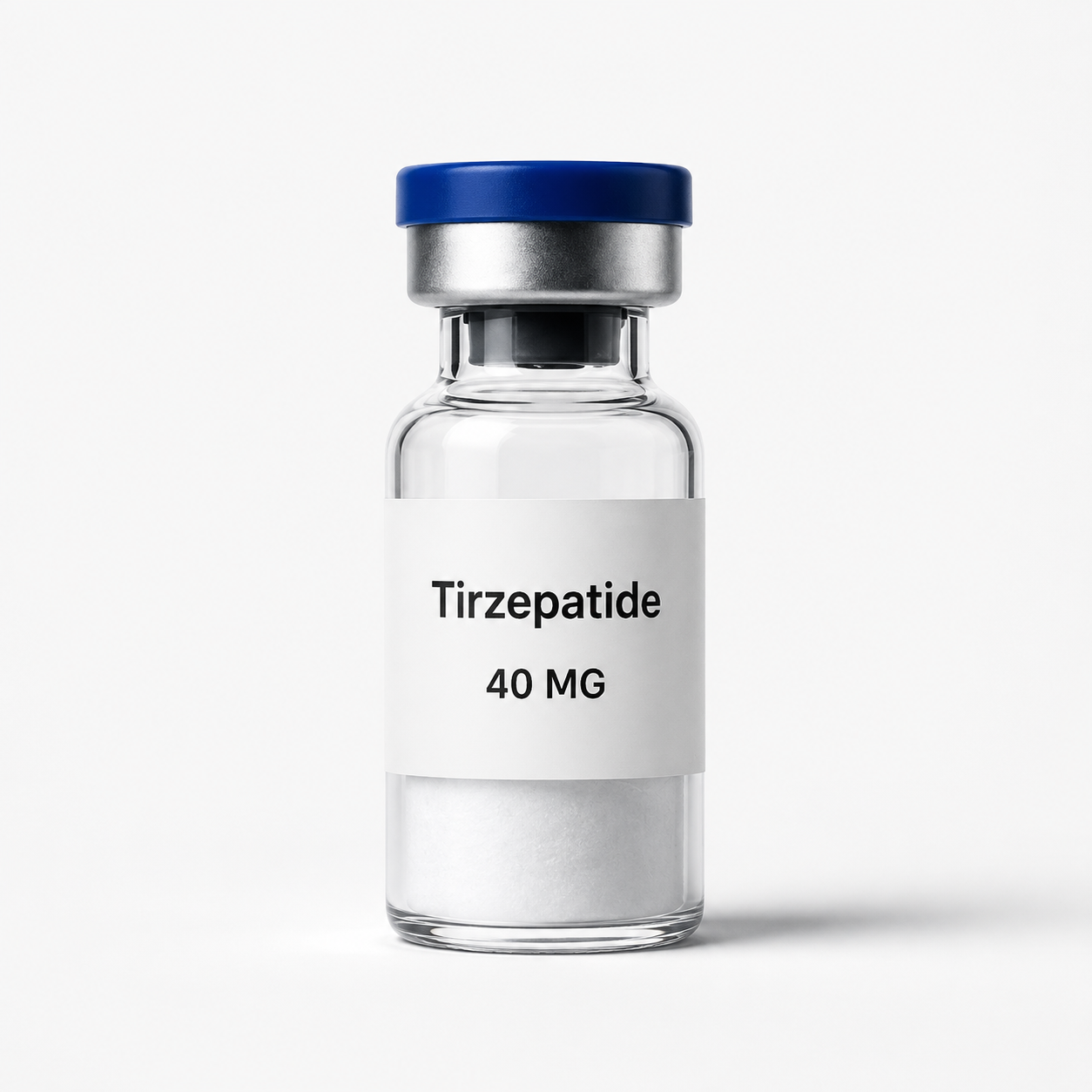
Dual incretin receptor research
Tirzepatide
40 mg
A 39-amino-acid peptide used in receptor pharmacology research involving dual GIP and GLP-1 receptor agonism and downstream metabolic signalling.
Research-use information only. Not presented for human or veterinary administration.
ABOUT THE COMPOUND
Description & research context
Tirzepatide is a synthetic 39-amino-acid peptide with activity at both the glucose-dependent insulinotropic polypeptide receptor and the glucagon-like peptide-1 receptor. It is widely used as a reference compound in receptor pharmacology and metabolic signalling research.
Experimental work can examine receptor binding and activation, second-messenger pathways, comparative incretin signalling and structure-activity relationships. Any product-specific research should distinguish analytical identity and assay behaviour from clinical claims associated with authorised medicines.
APPLICATIONS IN RESEARCH
Common experimental themes
- Dual GIP and GLP-1 receptor pharmacology
- Receptor binding and activation studies
- Cell-based metabolic signalling assays
- Comparative incretin pathway and structure-activity research
LABORATORY HANDLING
Handling & stability
- Handle lyophilised peptide using validated laboratory procedures.
- Use an assay-specific vehicle and concentration.
- Protect dry material from moisture and excessive light.
- Use controlled temperature and aliquoting practices for prepared research solutions.
- Record preparation conditions and analytical controls.
RESEARCH NOTES
Interpretation & precautions
- Reference chemical data may vary by salt or formulation form.
- Assay results depend on receptor expression and experimental conditions.
- This catalogue does not provide clinical administration guidance.
- For laboratory research use only.
REFERENCE READING