
Extracellular-matrix research
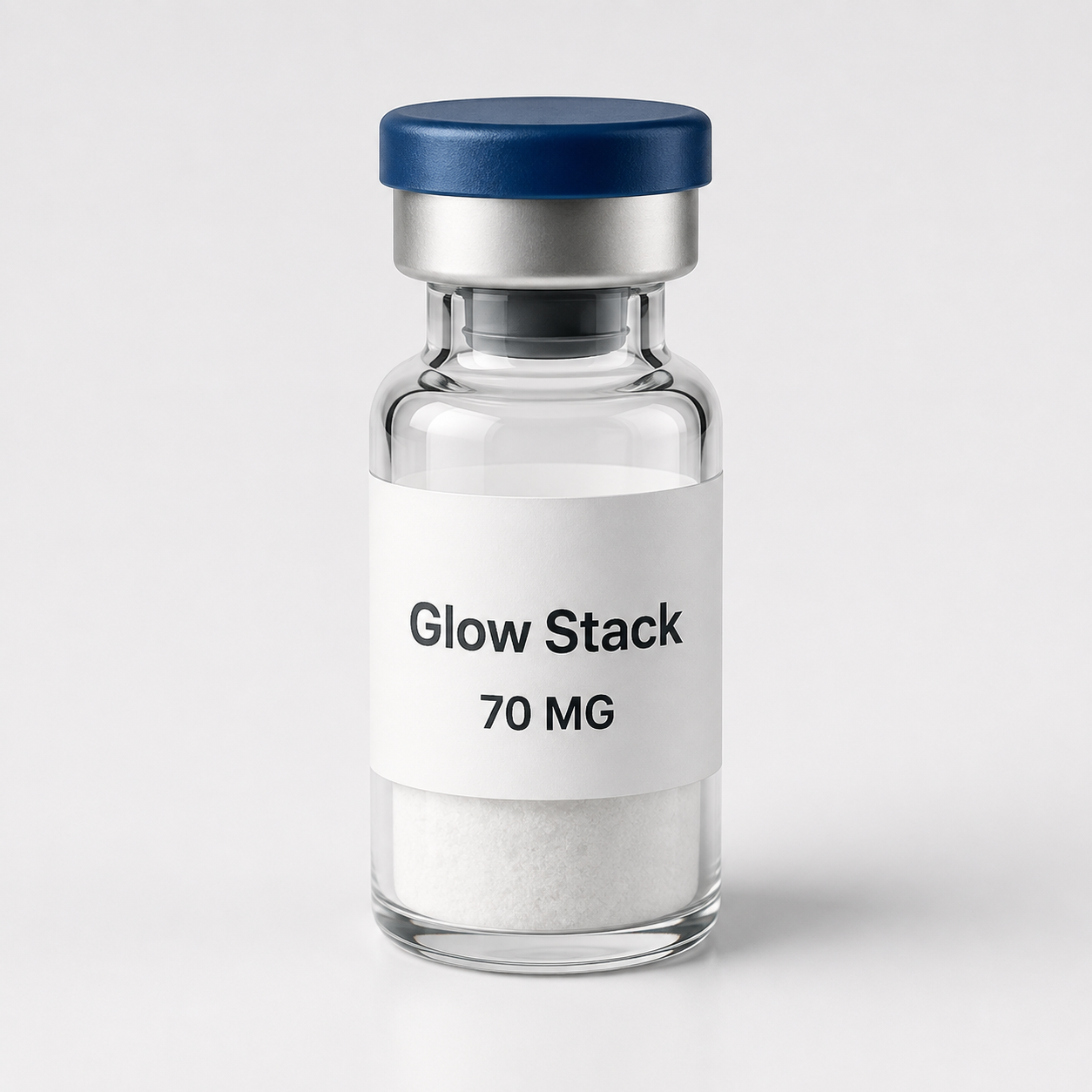
Glow Stack
70 mg total
A 70 mg laboratory research blend combining GHK-Cu 50 mg, BPC-157 10 mg and TB-500 10 mg for studies involving extracellular-matrix biology, collagen-associated pathways and repair signalling.
Research-use information only. Not presented for human or veterinary administration.
ABOUT THE COMPOUND
Description & research context
Glow Stack is a combined research preparation bringing together three peptides frequently investigated in extracellular-matrix and repair-associated research. GHK-Cu is studied in copper-mediated signalling and matrix biology, while BPC-157 and TB-500 are used in preclinical models involving cell migration, cytoskeletal regulation and repair-related pathways.
Because this is a multi-component preparation, interpretation should consider the properties of each peptide as well as potential interactions within the experimental system. The blend is best treated as a defined research mixture rather than as evidence for any clinical outcome.
APPLICATIONS IN RESEARCH
Common experimental themes
- Extracellular-matrix and collagen-pathway research
- Copper-peptide signalling models involving GHK-Cu
- Cell migration and cytoskeletal organisation studies
- Comparative multi-peptide signalling experiments
LABORATORY HANDLING
Handling & stability
- Use standard laboratory controls for multi-component peptide mixtures.
- Select a vehicle and concentration appropriate to the specific assay.
- Avoid vigorous agitation during dissolution.
- Protect prepared material from prolonged light exposure.
- Record lot, preparation conditions and component concentrations for reproducibility.
RESEARCH NOTES
Interpretation & precautions
- Results can reflect combined or interacting effects of the three components.
- Use single-component controls where possible to distinguish individual peptide effects.
- No purity or performance claim is implied without batch-specific analytical documentation.
- For laboratory research use only.
REFERENCE READING