
Cell & tissue signalling
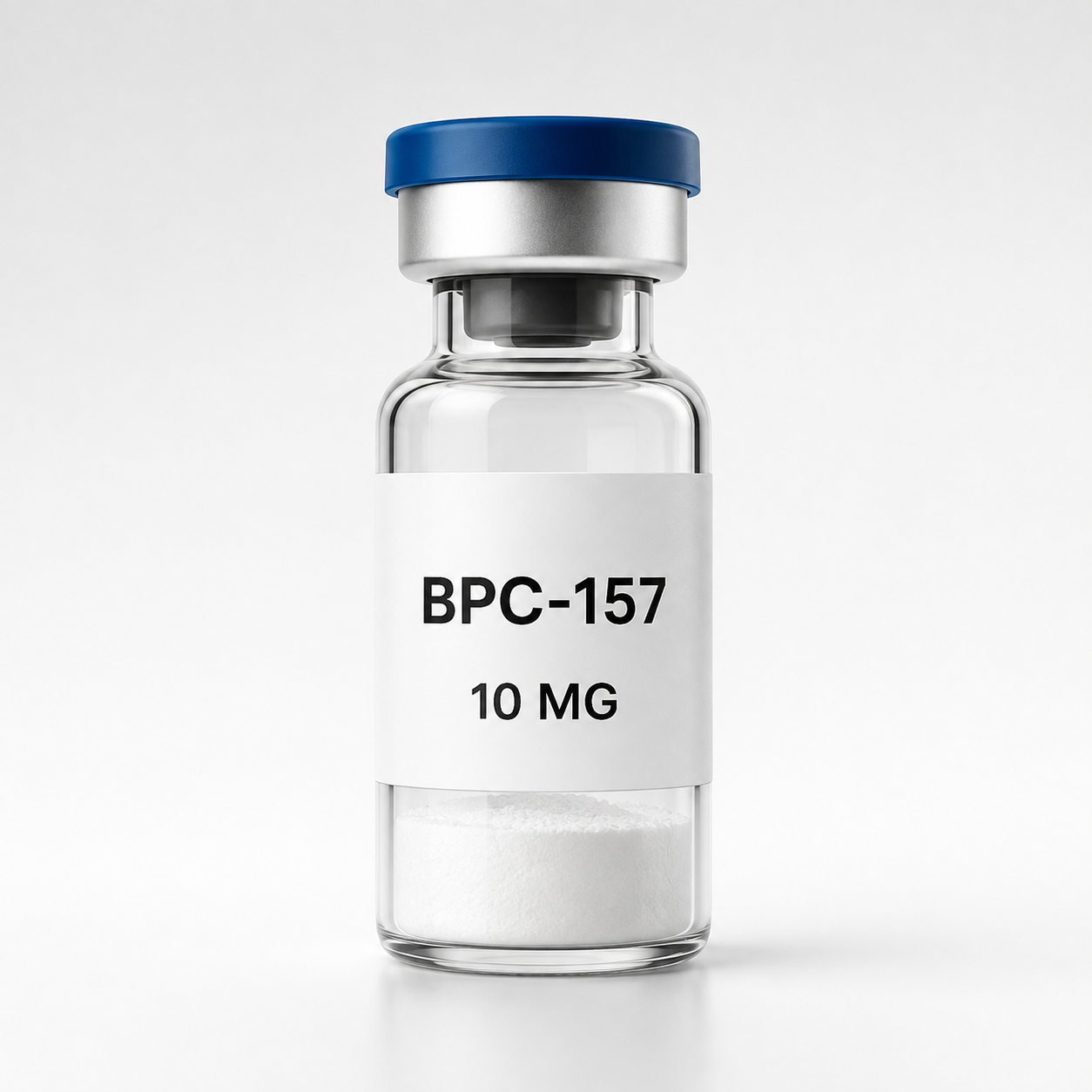
BPC-157
10 mg
A synthetic 15-amino-acid pentadecapeptide used in preclinical systems to investigate short-peptide signalling, cell migration, angiogenesis-related pathways and cell-matrix interactions.
Research-use information only. Not presented for human or veterinary administration.
ABOUT THE COMPOUND
Description & research context
BPC-157 is a synthetic 15-amino-acid oligopeptide corresponding to a sequence associated with a larger gastric-derived protein. Its defined size and physicochemical profile have made it a recurring reference compound in biochemical, cellular and preclinical research.
Experimental studies have examined BPC-157 across nitric-oxide-associated mechanisms, growth-factor signalling, angiogenesis, cytoskeletal regulation and cell-matrix interactions. The literature is primarily mechanistic and preclinical, so observations depend heavily on the model, exposure conditions and concentration used.
APPLICATIONS IN RESEARCH
Common experimental themes
- Short-peptide signalling pathway studies
- Nitric-oxide-associated and growth-factor signalling research
- Cell migration, angiogenesis and cell-matrix interaction models
- Tendon fibroblast and connective-tissue research systems
LABORATORY HANDLING
Handling & stability
- Handle dry lyophilised material using standard laboratory technique.
- Select an aqueous or buffered vehicle appropriate to the assay design.
- Avoid vigorous agitation during dissolution.
- Use aliquots where suitable and minimise repeated freeze-thaw cycles.
- Protect prepared material from prolonged light and elevated temperature.
RESEARCH NOTES
Interpretation & precautions
- Observed effects depend on experimental model, concentration and exposure duration.
- Appropriate positive and negative controls are recommended for signalling studies.
- Reference literature includes both cell-based and animal-model research; these are not clinical outcomes.
- For laboratory research use only.
REFERENCE READING